
extensions
Lash Extension Curls Explained: J, B, C, CC, D, L & M
July 14, 2026 · By Anastasiia
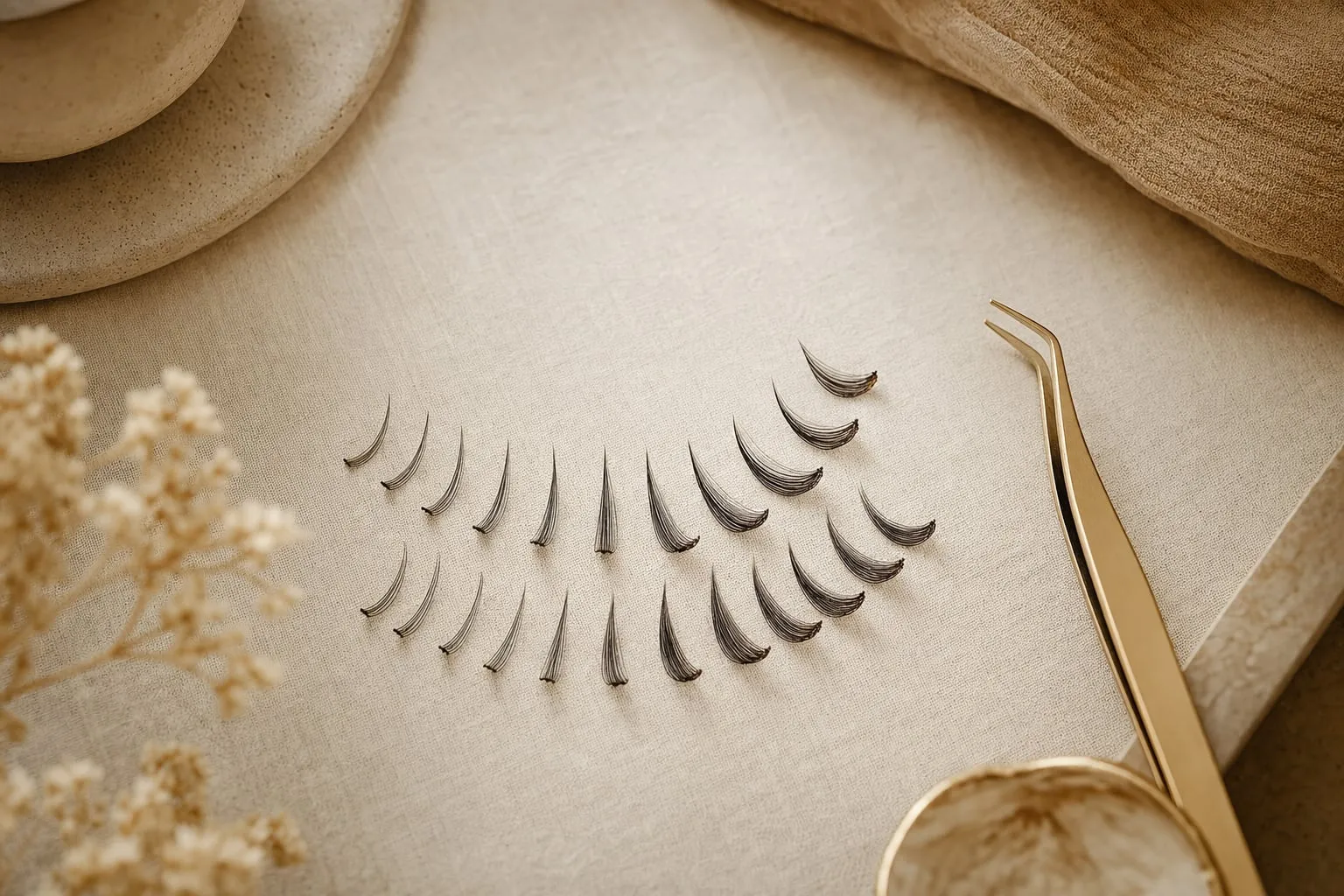
Curl is one of the three dials — alongside length and thickness — that decide how a set of eyelash extensions actually looks on you. Get the curl right and your eyes look lifted, awake, and like your eyes on a good day. Get it wrong and even flawless application can point the wrong direction or vanish under a hooded lid. Here’s what every curl letter means, and who each one is really for.
The short version
Curls run roughly from flattest to most lifted: J → B → C → CC → D, with L, L+ and M sitting apart as specialty “lift” curls with a straight base and a sharp upward kick. Lower letters follow your natural lash line for a soft look; higher letters open the eye more dramatically; the L family is built to rescue lashes that grow straight out or downward.
B / C curl
Natural- Shape
- Soft, gentle lift
- Reads as
- Mascara, everyday
- Best for
- Lashes that already curl a little
CC / D curl
Open & glam- Shape
- Strong upward lift
- Reads as
- Wide, doll-eyed, dramatic
- Best for
- Adding lift, glam sets, events
L / L+ / M
Lift rescue- Shape
- Flat base, sharp tip kick
- Reads as
- Lifted from straight/downward
- Best for
- Hooded eyes, monolids, glasses
Each curl, and who it’s for
- J curl — the subtlest of all, almost straight with just a hint of lift at the tip. It mostly mimics a natural lash line. It’s uncommon now because most clients want at least a little more openness, but it’s a lovely choice for a truly no-makeup look or for very long, straight lashes.
- B curl — a soft, natural curve, a touch more than J. Great when your own lashes already have a gentle bend and you just want them defined and darker.
- C curl — the most popular curl in the industry and the safe starting point for most people. It gives a clear, open-eyed lift that looks polished without shouting. If you don’t know what to ask for, you’re probably picturing a C.
- CC curl — sits between C and D. More lift than a C, but not the full drama of a D. A favorite for clients who feel a C “isn’t quite enough” but a D is too much.
- D curl (sometimes DD) — a bold, doll-eyed lift that opens the eye dramatically and photographs beautifully. It’s ideal for lashes that point slightly downward, because the strong curl pulls the look upward. On the right lash it’s stunning; on a lash that can’t hold the length, it’s where people get into trouble — which is why it’s matched carefully.
- L, L+ and M curls — the specialists. Each has a straight, flat base that bonds along more of the natural lash, then bends sharply upward at the tip. That flat base is the trick: it lets the curl clear a hooded lid, monolid, or downturned lash instead of disappearing or aiming at the floor. L+ and M are simply progressively more lifted versions. If you wear glasses and hate lashes brushing the lenses, or your lashes grow straight out, this family is usually the answer.
One thing the charts online won’t tell you
Curl letters are conventions, not a standard. There’s no universal ruler behind them — one manufacturer’s D can be another’s CC, and “M” means slightly different things depending on the brand a studio stocks. So a curl is best chosen in person, against your actual lashes, not ordered from a screenshot. The photo you saved is a great conversation starter; the final call comes from what your lashes can hold and the shape of your eye.
Curl works with length and thickness — never alone
The look you’re imagining is really curl plus length plus how the set is built. A dramatic curl on a heavy, over-long fan is what stresses a natural lash — not the curl itself. That’s why we make every volume fan by hand, never pre-made, so each fan stays light and can be paired with the curl your lash actually supports. Curl decides direction; a classic, hybrid, or volume build decides density.
How we pick your curl at Eye Charm
Every set in our Hyde Park, Austin studio starts with a consultation and a shape mapped to your eyes. We look at how your lashes grow, your lid, and the look you want, then choose a curl (or blend of curls across the eye) that lifts your eyes specifically — often a stronger curl toward the outer corner for a subtle cat-eye, a softer one at the inner corner so it never feels harsh. It’s the same care whether you’re booking a natural classic set or full handmade volume.
Not sure which curl is you? That’s exactly what the consultation is for — book your appointment and we’ll map it together in person.
Curl is chosen at your consultation, not from a chart — our eyelash extensions in Austin page covers how we map a set to your eyes.