
lash lift brows
Brow Wax vs Threading: Which Is Better for Your Brows?
May 31, 2026 · By Anastasiia
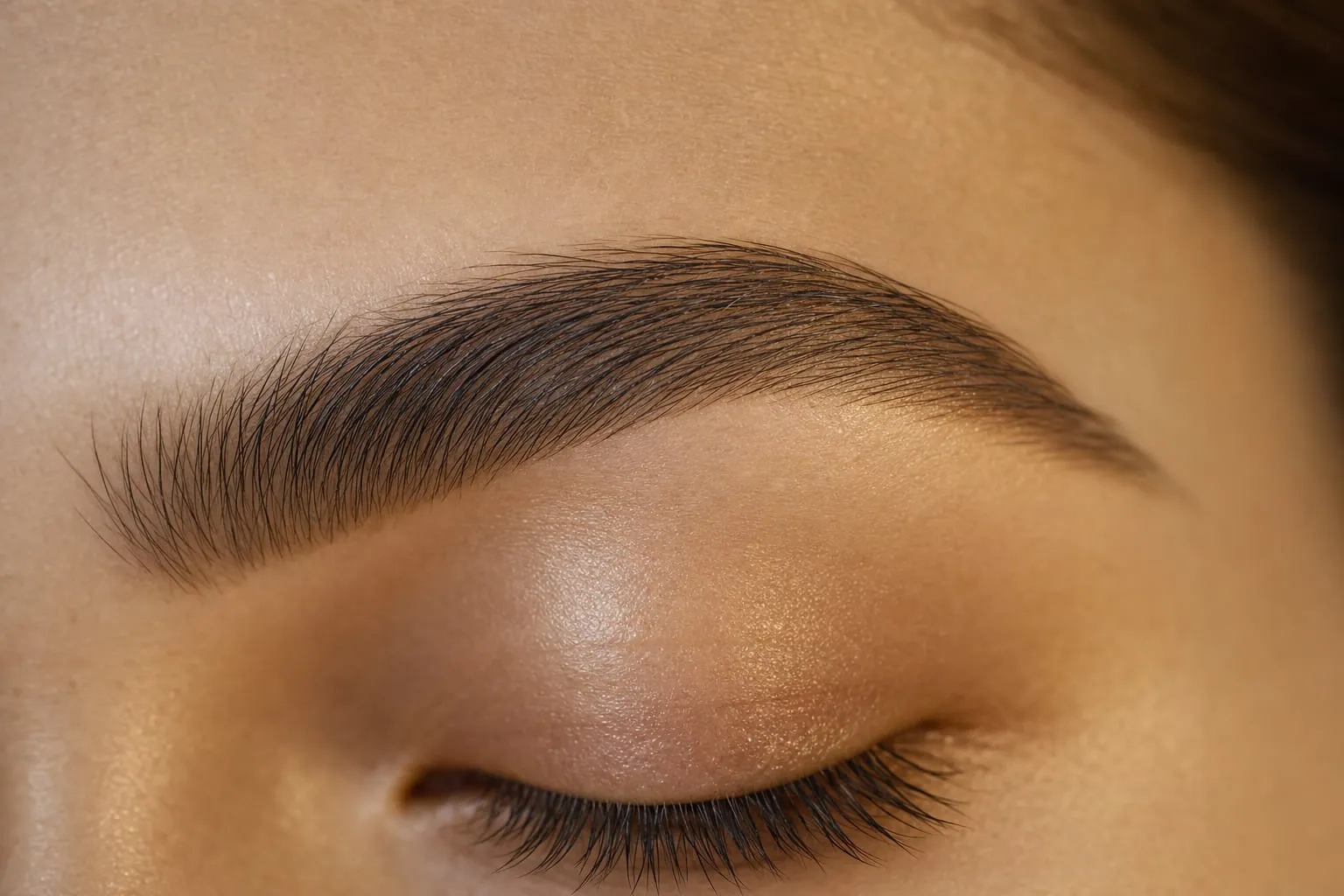
Brow waxing and threading both pull hair from the root, so neither has a built-in longevity advantage. The real difference is how they work: wax takes every hair under it in one pull, and threading uses a twisted loop of thread, with no heat or wax, to pick out hairs down to a single stray. Choose on method and on what’s on your skin, not on price. At Eye Charm, a lash and brow studio in Hyde Park, Austin, both are $30.
The short version
- A whole section cleared in one pull: wax.
- Single-hair detail, or you’d rather skip wax altogether: threading.
- On retinol or tretinoin: dermatologists advise pausing for days before either one, since retinoids affect threading too. At Eye Charm we don’t wax or thread brows while you’re using them.
- On isotretinoin (Accutane), or within six months of it: don’t wax. That comes from the drug’s FDA label.
- Which lasts longer: neither has a built-in edge. Both remove the hair from the follicle.
- Which hurts more: we found no study comparing them.
How do waxing and threading work?
Both are plucking methods. The FDA’s consumer guide on hair removal groups waxing and threading together because, unlike depilatory creams, they pluck hairs out of the follicle, below the surface.
Waxing, as the FDA describes it, applies a layer of melted wax that hardens and “is then pulled off quickly in the opposite direction of the hair growth, taking the uprooted hair with it.” Every hair under the wax comes out together. Threading is, in the FDA’s words, “an ancient technique in which a loop of thread is rotated across the skin to pluck the hair.” A 2012 paper on threading technique describes the skin being held steady “for more precise shaping and removal of single hairs.”
That mechanical difference explains almost everything else in the comparison below.
Brow wax
$30
- How
- Melted wax, one pull per section
- Removes
- Every hair under the wax
- Heat
- Warm wax (or cold wax)
- Retinoids
- Pause 2–5 days first (AAD)
- Isotretinoin
- Not within 6 months (FDA label)
Threading
$30
- How
- Twisted loop of thread
- Removes
- Rows or single hairs
- Heat
- None, no wax on skin
- Retinoids
- Still pause 5–7 days (Cleveland Clinic)
- Isotretinoin
- Ask your dermatologist
Prices at Eye Charm in Hyde Park, Austin. Both are a 15-minute brow appointment.
Which lasts longer, threading or waxing?
Neither has a built-in advantage, because both remove the whole hair from the root. A Cleveland Clinic dermatologist puts it plainly: “Like waxing and plucking, threading pulls the hair fibers out from the root,” and says most people get threaded every three to four weeks. The same root-to-tip logic applies to waxing.
If you read that one method “lasts weeks longer,” check who is saying it. Several of the pages ranking for this question belong to businesses that sell only one of the two, and none of them cites a study.
Is threading better for sensitive skin?
Sometimes, but it isn’t a free pass. Threading puts no wax on the skin, which matters if wax itself is what your skin reacts to. It still pulls hair from the follicle, though, and the same Cleveland Clinic article lists skin bleeding or peeling as its most common side effects.
The bigger factor is what is on your skin:
- Retinol and prescription retinoids. The American Academy of Dermatology advises stopping them two to five days before waxing your face “to avoid removing skin along with your hair.” Cleveland Clinic’s dermatologist advises stopping retinoids and retinols five to seven days before threading too.
- Isotretinoin (Accutane). The drug’s FDA label says wax epilation “should be avoided during isotretinoin capsules therapy and for at least 6 months thereafter due to the possibility of scarring.” The AAD gives the same six-month rule. The label doesn’t mention threading, so ask your prescribing dermatologist before any brow hair removal in that window.
- Sunburned, irritated or broken skin. The FDA says wax shouldn’t be used on “irritated, chapped, or sunburned skin.” Wait until it has healed.
Does threading or waxing hurt more?
We found no study that compares them. Every pain score you see online is an estimate. What differs is the pattern: wax comes off in one pull per section, while threading plucks hairs in quick succession along the brow. The 2012 threading paper notes that keeping the skin taut “is also thought to reduce pain associated with the procedure.” If you want a pause between passes, say so.
Is threading bad for your skin?
For most people, no, but it isn’t risk-free, and neither is waxing. Writing about waxing, sugaring and threading together, the FDA says “all of these techniques may cause skin irritation and infection.” The 2012 paper in the International Journal of Trichology calls threading “considered fairly safe.” It lists rare reported complications: folliculitis, pseudofolliculitis, flat warts, molluscum contagiosum, hyperpigmentation and triggering of vitiligo. It stresses “proper technique, disposable threads, and sterilization of reusable materials.”
Two practical takeaways:
- Watch for a fresh thread. A thread should never be reused between clients, which is why the paper stresses disposable threads.
- Bumps after either method can be folliculitis. DermNet notes it can arise as hairs regrow after waxing or plucking. If redness spreads, hurts, or doesn’t settle, see a doctor rather than waiting it out.
Do you need a license to thread eyebrows in Texas?
No. Texas law says barbering and cosmetology “do not include” threading, an exemption added in 2017. Removing hair with wax falls under licensed cosmetology in Texas (Occupations Code §1603.0011). So threading needs no state cosmetology license, while waxing falls under one. That makes it reasonable to ask anyone threading your brows where they trained.
Does threading or waxing make brows grow back thicker?
We found no evidence that it does. The same FDA guide says “shaving does not change the texture, color, or growth rate of hair,” and Mayo Clinic explains why shaved hair can feel thicker: shaving “gives the hair a blunt tip” that can feel coarse as it grows out. Waxing and threading pull the hair out instead of cutting it, so they don’t leave that cut tip.
How we shape brows at Eye Charm
Ana, Eye Charm’s founder, holds 30+ international certifications, including a 2020 brow masterclass.
- Tell us what’s on your skin. Retinoids and isotretinoin change what’s safe that day. Your artist asks before starting. If you use retinol or a topical prescription retinoid, we won’t wax or thread your brows. If you’ve taken isotretinoin (Accutane) in the last six months, we won’t wax them, which follows the FDA label above, but we can thread instead. Check with the dermatologist who prescribed it first.
- Hard wax and strip wax. The studio uses both.
- Cleansed first. The brow is cleaned with a brow mousse cleansing solution before waxing or threading.
- A fresh thread for every client. Threading is by request with Samantha, so mention it when you book. Each client gets a new thread, never one reused from the last person.
- Wax or thread, same price. A brow wax or threading is $30 and takes about 15 minutes.
- How often clients come back. In our booking records from January 2022 to September 2026, half of the brow clients who returned did so about every three to five weeks. The rest came back every few months. That’s 18 returning clients, so treat it as a rough guide. Your regrowth sets your timing.
- Pair it with something that lasts longer. Shaping sets the edge. For fuller, brushed-up hairs for weeks, add brow lamination. For depth, add a tint. For lashes, see our guide to a lash lift and tint.
All of our brow services, with prices, are on the brow lamination, tinting and waxing in Austin page. Booking body waxing as well? See face and body waxing and our Brazilian wax aftercare tips.
Not sure which to choose? Book a $30 brow shape, tell us about your skin, and we’ll recommend wax or thread on the day. Book your brow appointment at Eye Charm in Hyde Park, Austin.