
extensions
Are Eyelash Extensions Safe? Pregnancy, Surgery, MRI & Eye Health
July 16, 2026 · By Anastasiia
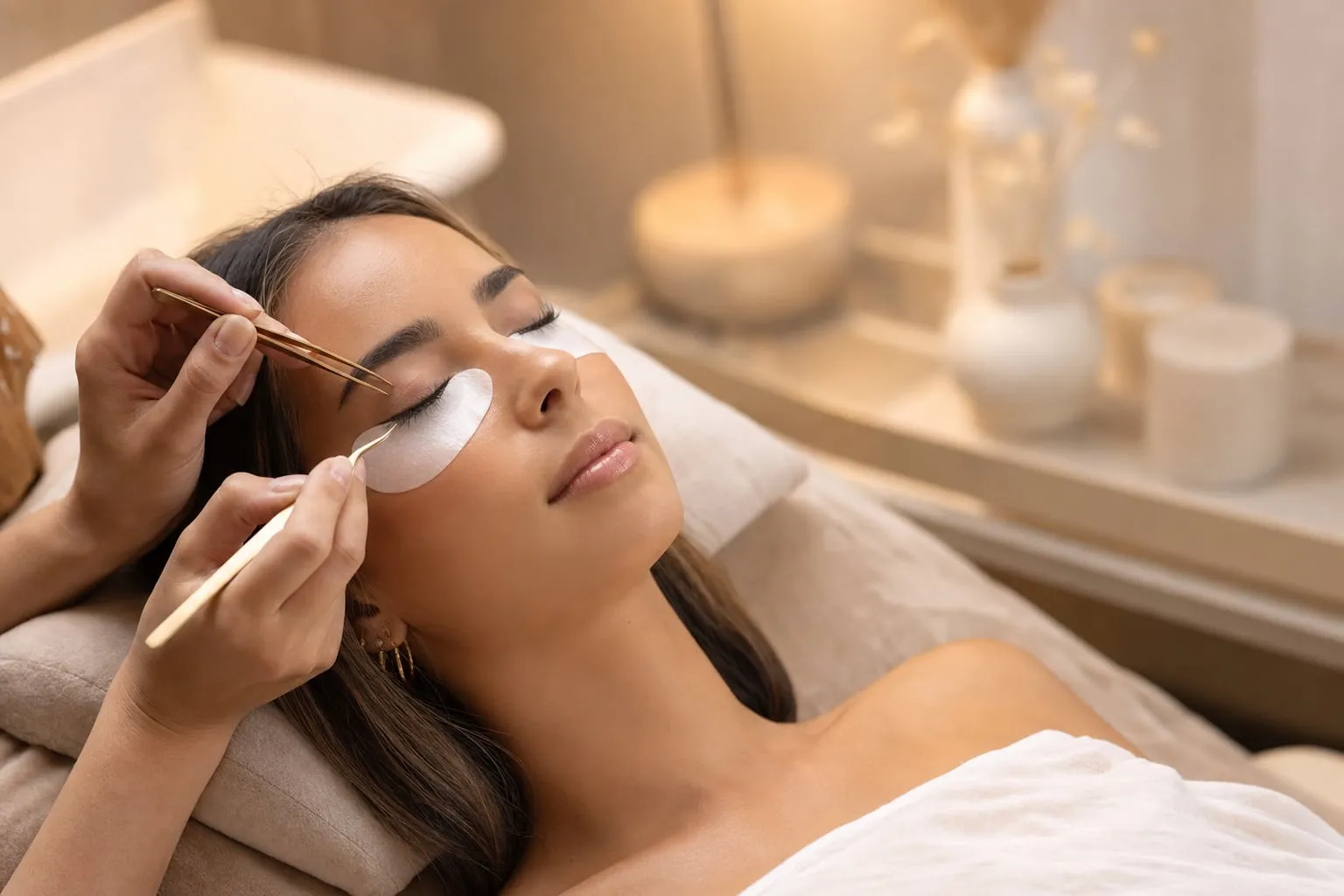
Eyelash extensions are safe for most people who wear them, but the risks are real: the American Academy of Ophthalmology lists infection or injury to the eyelid or cornea, allergy to the glue, and lash loss. In the largest clinic series, every case cleared up with treatment from an eye doctor, though lash loss can be permanent. Pregnancy, surgery, MRI scans and glaucoma each need a specific step, covered below.
This is general education, not medical advice. For eye swelling, pain, discharge or any change in vision, see a doctor. Before a medical procedure, follow your care team’s instructions.
The short version
- The risks: eyelid or corneal injury or infection, glue allergy, and temporary or permanent lash loss, according to the American Academy of Ophthalmology.
- How common: in a Japanese national survey, 55 of 205 women who had worn extensions (26.8%) reported a health problem such as red eyes, pain or itchy, swollen lids.
- Pregnancy: we found no study, and no NHS or ACOG guidance. Tell your OB and your artist.
- Surgery: extensions should ideally come off first, and for any eye surgery they should.
- MRI: magnetic lashes must come off. For glued extensions, tell the MRI team.
- Glaucoma: extensions don’t affect the disease itself, according to an AAO ophthalmologist.
What are the risks of eyelash extensions?
The main risks are eye irritation or infection, an allergic reaction to the adhesive, and damage to your natural lashes. The AAO puts it as “trauma to or infection of the eyelid or cornea; allergic reaction to the glue; and permanent or temporary loss of eyelashes.” The US FDA treats extensions and their adhesives as cosmetics, which must meet cosmetic safety and labeling rules.
The best clinical picture comes from Japan. A 2012 study in Cornea reviewed the records of 107 women who went to eye clinics with problems after extensions. It found:
- 64 had keratoconjunctivitis, an inflammation of the cornea and conjunctiva from glue or remover getting into the eye.
- 42 had allergic blepharitis, inflamed eyelids from an allergy to the glue.
The researchers also noted that “in all 107 patients, the symptoms were resolved” with eye drops or ointment.
A 2013 national survey by the same lead author found that 26.8% of women who had worn extensions reported a problem. Those who had sets redone at short intervals were more likely to report one.
Two more findings are worth knowing:
- Formaldehyde. A 2022 study in Dermatitis found that 15 of 20 professional lash glues (75%) released formaldehyde, a known allergen, and that glues “may release formaldehyde despite not being declared as an ingredient.” A glue that doesn’t list formaldehyde can still release it.
- Dry eye. In a 2024 study of extension wearers with dry eye, removing the extensions improved both symptoms and measured tear stability. If your eyes already run dry, raise that before a set.
For your natural lashes, the AAO warns that rubbing, tugging or pulling can fracture lashes and “even cause permanent damage to the eyelash follicle.” That’s why extensions should come off with a professional removal and never be picked off. A set mapped to what your lashes can carry is less likely to strain them than an oversized one; more in do eyelash extensions damage your natural lashes.
Are eyelash extensions safe during pregnancy?
No one knows for certain, because the question hasn’t been studied. We found no guidance on eyelash extensions in pregnancy from the NHS or ACOG, and no study on PubMed. Many pages answer confidently anyway with “skip the first trimester”, a rule we found no medical source for. Positioning is different: the NHS advises going to sleep on your side from 28 weeks, so ask your OB how to lie during a long appointment later in pregnancy.
The nearest official advice is the NHS’s page on hair dye in pregnancy. It notes that “skin can be more easily irritated while you’re pregnant.” It also advises telling the technician you are pregnant, asking for a patch test even for a product you’ve used before, and using a well-ventilated room. The same three steps make sense for lash adhesive, and for the perming solutions in a keratin lash lift.
Two practical points:
- Lying still. A full set means lying back for a long stretch (105–200 minutes at our studio, depending on the style and artist), so ask your OB whether that position is fine for you at your stage.
- A planned C-section. If one is planned, the surgery advice below applies. A 2024 case report describes a corneal abrasion in a woman wearing extensions during general anesthesia for a C-section.
Do you need to remove eyelash extensions before surgery?
Usually, yes. The Anesthesia Patient Safety Foundation’s newsletter says that “ideally, eyelashes should be removed prior to surgery.” If they can’t be, the patient should be told about “an increased risk of corneal abrasions, infection, and inadvertent removal of lashes.” Under general anesthesia, about 60% of patients don’t fully close their eyes, according to a 2024 case report in Cureus citing earlier research, so what sits on the lid matters.
For eye surgery the advice is firmer. Asked about LASIK, an ophthalmologist writing for the AAO said the extensions should be “removed prior to any eye surgery,” because they “tend to harbor bacteria and other foreign matter.” Ask your surgical team when you schedule the procedure, and book a removal rather than picking them off the night before.
Can you get an MRI with eyelash extensions?
Magnetic lashes must come off before an MRI. A 2020 study found them “MR unsafe.” The American College of Radiology’s Manual on MR Safety lists “magnetic eyelashes” and eye makeup with metallic particles among the things patients should remove.
The ACR manual does not name glued extensions. One 2012 analysis found low levels of lead in lash glues, but we found no source on whether glued extensions contain magnetic metal. So don’t decide this yourself. Write “eyelash extensions” on the screening form, and let the MRI team decide.
Pregnancy
No evidence either way- Studied?
- No study; no NHS or ACOG guidance
- Nearest advice
- NHS on hair dye: patch test, ventilation
- Do this
- Ask your OB; tell your artist when you book
Surgery
Remove if you can- Why
- Corneal abrasion and infection risk (APSF newsletter)
- Eye surgery
- AAO ophthalmologist: remove before any eye surgery
- Do this
- Ask your surgical team when you schedule
MRI
Tell the MRI team- Must remove
- Magnetic lashes, metallic eye makeup (ACR)
- Glued extensions
- Not named by ACR; no source either way
- Do this
- List them on the screening form
Glaucoma
Check with your eye doctor- The disease
- AAO ophthalmologist: won't affect it
- Drops
- Some can lengthen natural lashes
- Do this
- Ask about visual field tests and recent surgery
Can I get eyelash extensions if I have glaucoma?
According to an ophthalmologist answering for the AAO, extensions “won’t affect your glaucoma.” The same answer points out that some glaucoma drops grow lashes over time. The NHS lists changes to your eyelashes, “growing longer and thicker,” as a common side effect of latanoprost, so you may need extensions less than you think.
Two things are worth raising with your eye doctor. A 2024 case report found that false eyelashes lowered the reliability of a visual field test, the test used to track glaucoma. It concerned false lashes, not extensions, but it’s worth asking whether they want lashes off or taped for that test. And if you’ve recently had eye surgery, wait for your surgeon’s all-clear.
How to check that a studio is doing it safely
In Texas, lash artists are licensed by the Texas Department of Licensing and Regulation (TDLR). Its Eyelash Extension Specialist license requires “320 hours of instruction at a licensed school” and passing written and practical exams, according to TDLR. You can check any artist on TDLR’s license search.
The state’s lash sanitation rule, 16 TAC §83.115, requires the following. You can watch for each one:
- The artist washes their hands with soap and water before starting.
- Tweezers are cleaned and disinfected after every client.
- Eye pads, tape, brushes, swabs and the extensions themselves are single-use and thrown away.
- Only properly labeled glue and remover are used, following the manufacturer’s instructions.
How we keep it safe at Eye Charm
Eye Charm is a lash studio in Hyde Park, Austin. Both artists, Ana and Samantha, work to the same consultation and application method.
- Consultation first. Before anything touches your lashes, we look at how long and strong they are, and map a set they can carry. Sometimes that means a lighter set than the one you asked for.
- Placement. Each natural lash is isolated, and each extension or handmade fan goes on that one lash, never on the skin and never across two lashes.
- Tools. Disposables are single-use and tweezers are disinfected after every client, as Texas rule §83.115 requires.
- Sensitive adhesive and patch tests. Ana keeps a sensitive, low-fume adhesive for reactive eyes, and we do a patch test on request. If you’ve reacted to lash glue, hair dye or a lift before, ask for one when you book. Our glue and cyanoacrylate guide explains what a patch test can and can’t tell you.
- When we postpone. We won’t lash irritated or infected eyes, or eyes that have had recent eye surgery.
- What we ask first. Before a set we ask about pregnancy, upcoming surgery or an MRI, and eye conditions such as glaucoma, and plan the appointment around the answers.
- Pregnant clients are welcome. We don’t turn you away; we adjust the appointment for you. Tell us when you book, and check with your OB first.
If your eyes run reactive, read lash extensions for sensitive eyes first. If you want something with no adhesive at all, a keratin lash lift curls your own lashes instead. It has chemical risks of its own, covered in how a lash lift works, step by step.
The details of how we work, from consultation to handmade fans to fill timing, are on our eyelash extensions in Austin page. Have a health question first? Book a consultation and ask it before we begin.